(This post dedicated to Dad and Allegra, who worried about us for three months and were hungry for details about the final leg of our adventure.)
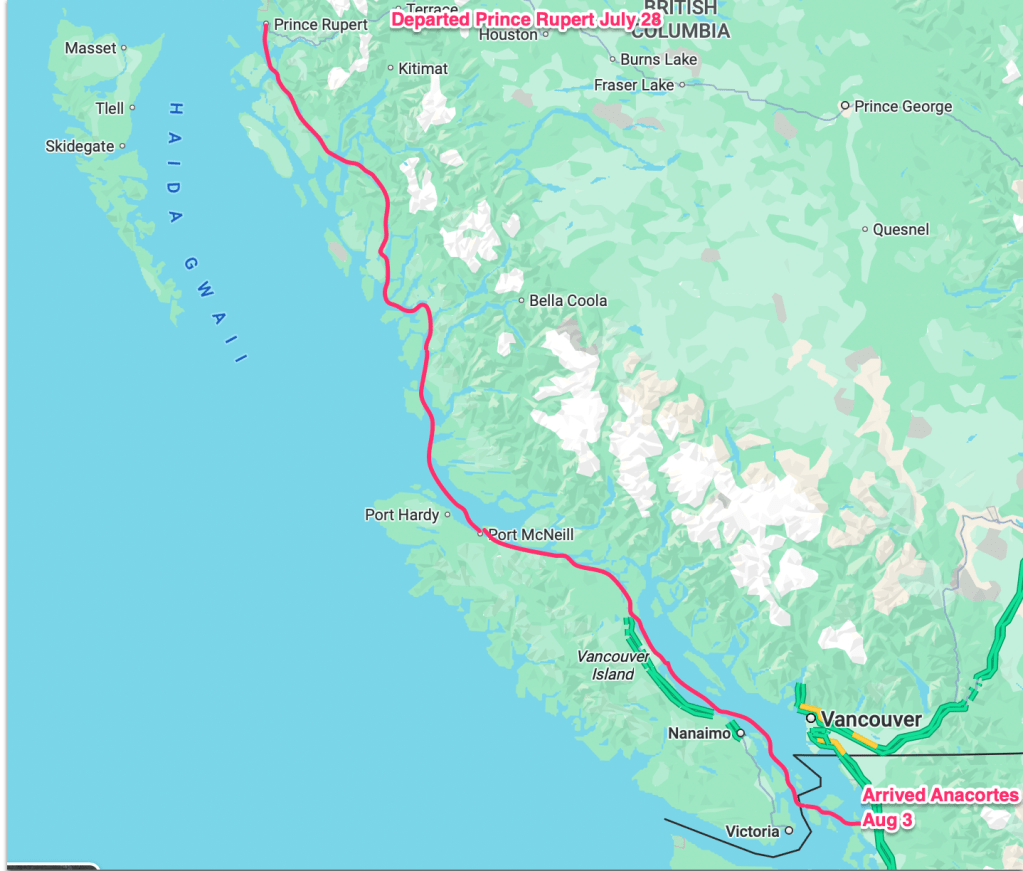
When we arrived in Prince Rupert we were planning a leisurely voyage home, stopping at sights we’d missed on the journey north, and told Canadian Customs we’d be in country about 18 days. When we left Rupert two days later we were hurrying to Anacortes so we could spend a day with Ellie before she moved east.
Prince Rupert’s fuel dock was busy Monday morning, preventing an early departure, but we were still able to cover 60 nautical miles, cruising into magnificent Grenville Channel, a narrow fjord on the Inside Passage. We tucked into Lowe Inlet for the night, with a waterfall as background music while Bob barbecued halibut and we settled in. Steep walls of the inlet hide early morning and late evening sun, so in addition to days growing shorter, we had high walls of granite blocking out light. That made going to sleep easy.
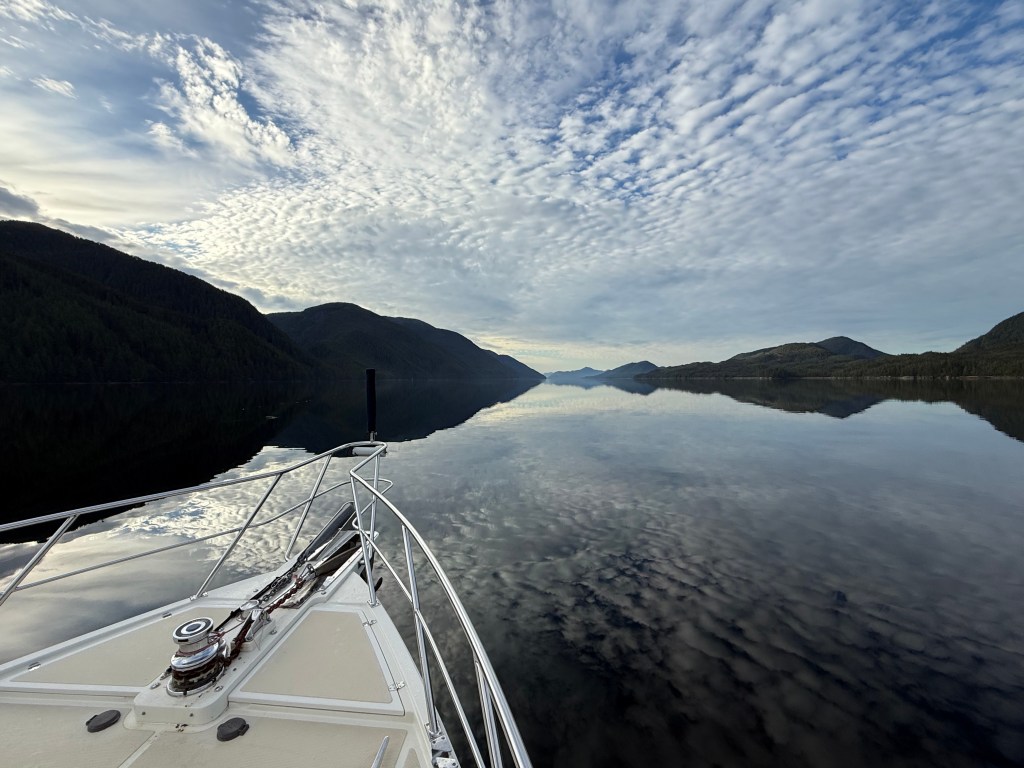
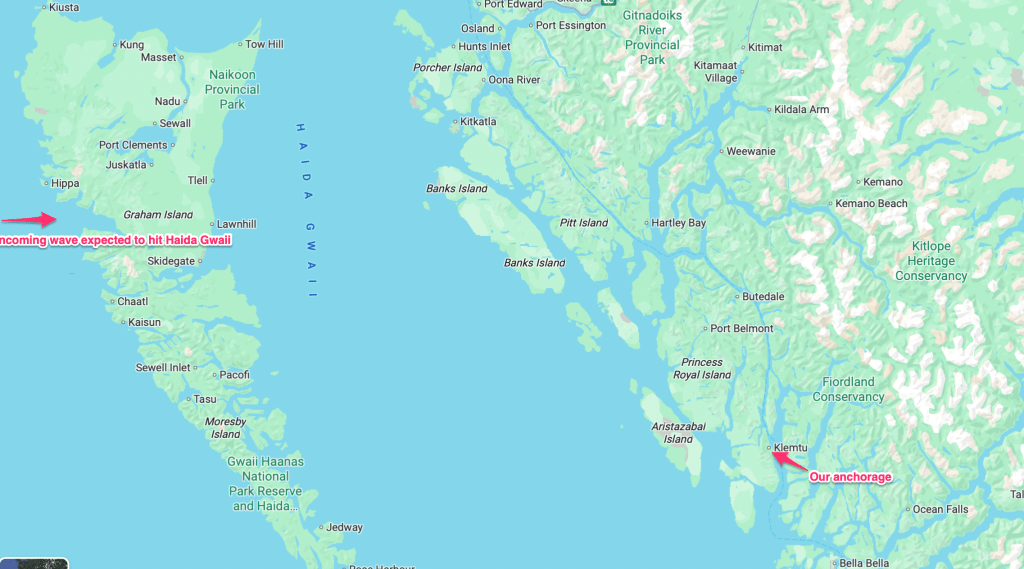
Alarms were set for 5:30 Tuesday morning and we set off for Klemtu, 81 nautical miles south. It was a perfect sunny day with fair seas and little traffic, but when we finally reached Klemtu we were tired from cruising all day. Assessing the small, dilapidated docks at this First Nations village made us decide to anchor in Clothes Bay, the small cove just south of town. This would turn out to be fortuitous.
We entered Clothes Bay about 4:30, ready to relax after many hours underway. With no one else in the bay, we had a choice of spots, and Bob found a location that gave us plenty of swinging room on all sides. In an empty cove with a well set anchor and no weather concerns, good sleep is assured. We were ready for it.
Bob is always monitoring radio traffic. Often the chatter is unimportant, but you never want to gamble on missing something critical. At 6:00 PM a Coast Guard alarm sounded on the radio, reporting an 8.7 earthquake in Kamchatka, and our location was under a tsunami warning. We looked at each other: Really? Did we hear that correctly?
The alert came in again a few minutes later. Then, again. It was repeated numerous times over the next hour, but no other information was forthcoming. This became a big challenge. Kama Hele is equipped with Starlink but Canadian websites and sources had little that could help us make an informed decision. Should we stay? Head out to sea? Take the dinghy to shore and head for high ground? Bob did not want to leave the boat, so getting reliable information was critical. He texted Brian our location coordinates and asked if he could find information. I called Brad, who understands the physics of just about everything and could give us an understanding of likely scenarios. Brad knows what happens to the earth when quakes happen, what kind of quake occurred, and how water would likely move. He knew what happened in San Francisco Bay in the aftermath of Fukushima’s 9.0 earthquake, and had confidence at most we would experience a full tidal change in a quick 20 or 30 minute period, but not a wave. Being at anchor instead of a dock was an advantage; had we stayed at Klemtu docks it would have been prudent to move, difficult due to our fatigue and the diminishing light. When Bob radioed Canadian Coast Guard, they said an incoming wave at Haida Gwaii was expected at 10:10 PM; Brian’s research said a wave would be small, of short duration, and not likely to impact us.
Comforted by information from my brothers, we finally went to bed, though slept with radios on and ‘one eye open’, just in case. We felt nothing. Up at 5:30 to get an early start the next morning, Bob’s first words were “Well, that was a lot of stress for nothing.” Coast Guard called off the tsunami watch at 6:00 AM. Perhaps we were never really in any danger, but it was unbelievably reassuring to have loved ones help from afar.
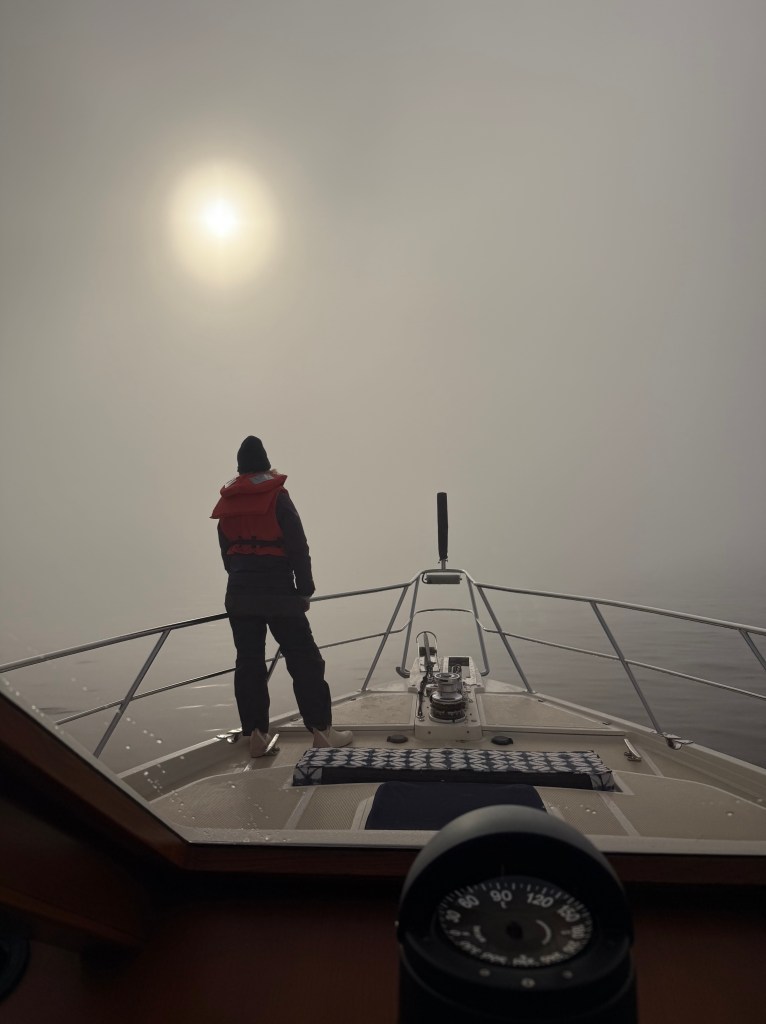
The next two days were long cruises, marked by a lot of fog. We covered 86 nautical miles to Big Fry Pan Bay on Wednesday, then crossed a very calm but foggy Cape Caution, making it safely to Port McNeill on Thursday, 70 nautical miles later. NorthIsland Marina squeezed us in during their busy high season so we dropped off homemade cookies to the young staff as a thank you.
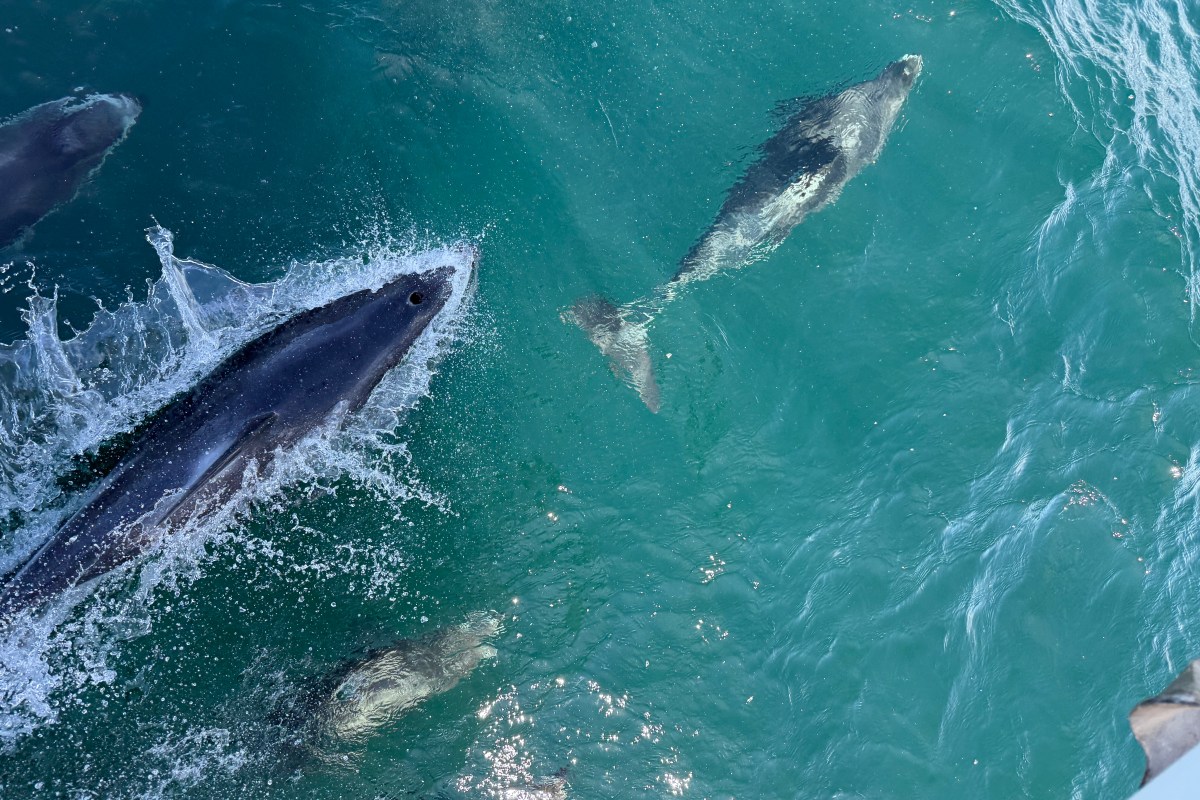
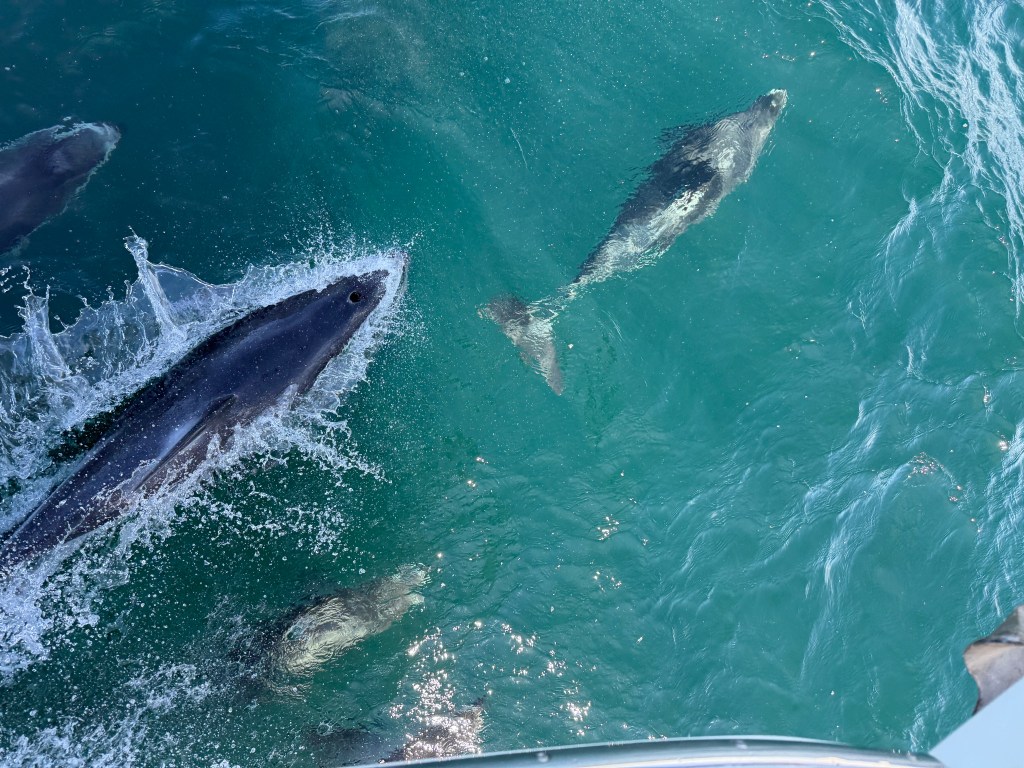
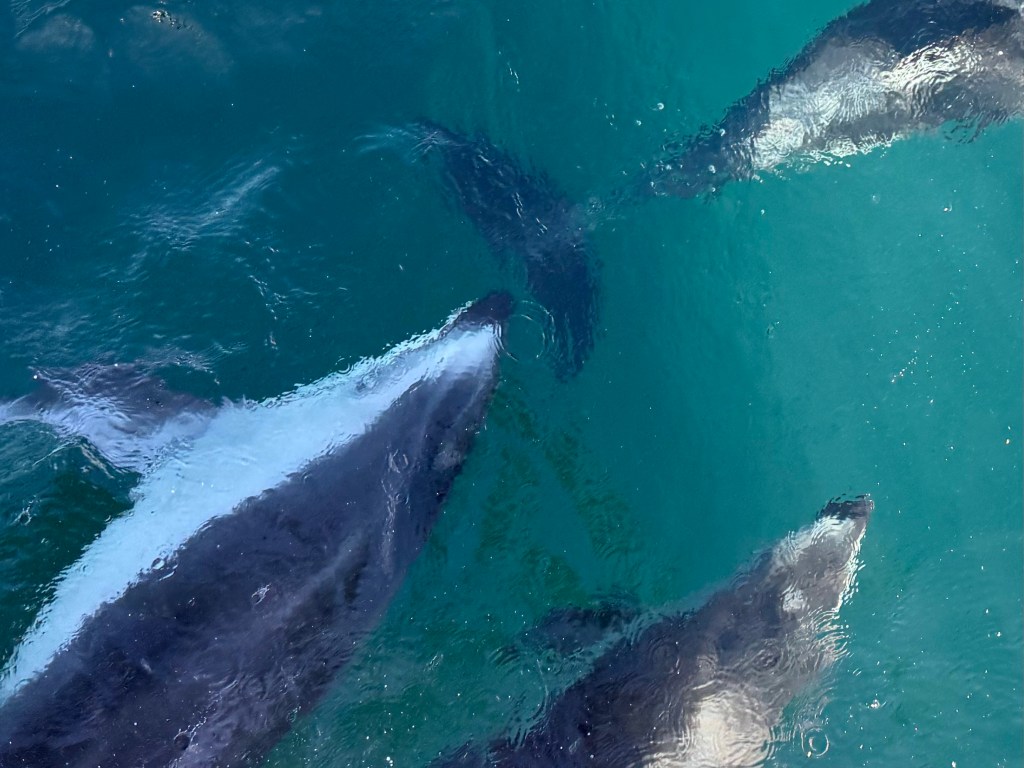
The days were running together, each one long and tiring, but being back in familiar waters made things easier. Our cruise down Johnstone Strait became a highlight, thanks to a pod of dolphins playing in our wake for over an hour. Bob and I took turns on the bow, our head over the side, waving and marveling at their grace, power and persistence. Sometimes they turned on their side, with one eye facing us, and we wondered who was observing whom? Were the they playing? Wanting to communicate? It felt like a gift from the universe – a suspended moment in time, in synch with dolphins.
We returned to Anacortes from our Alaska expedition on Sunday afternoon, 2,583 nautical miles and 86 days after departing, thankful for the many opportunities to explore and very happy to be home.
 Edging Forward
Wh
LikeLike
Great last blog Kim, I loved it! You are so good at this! I’m so happy you guys had such an awesome trip and the dolphins welcomed you home so sweetly
LikeLiked by 1 person
Thanks, Sis! 🙂
LikeLike