
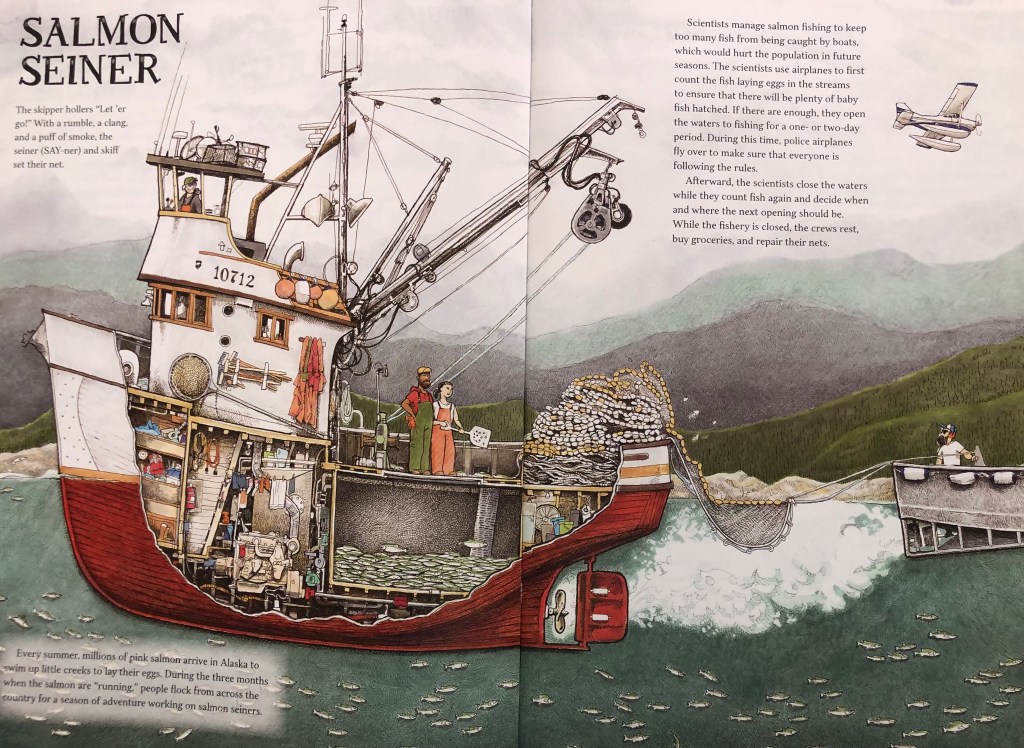
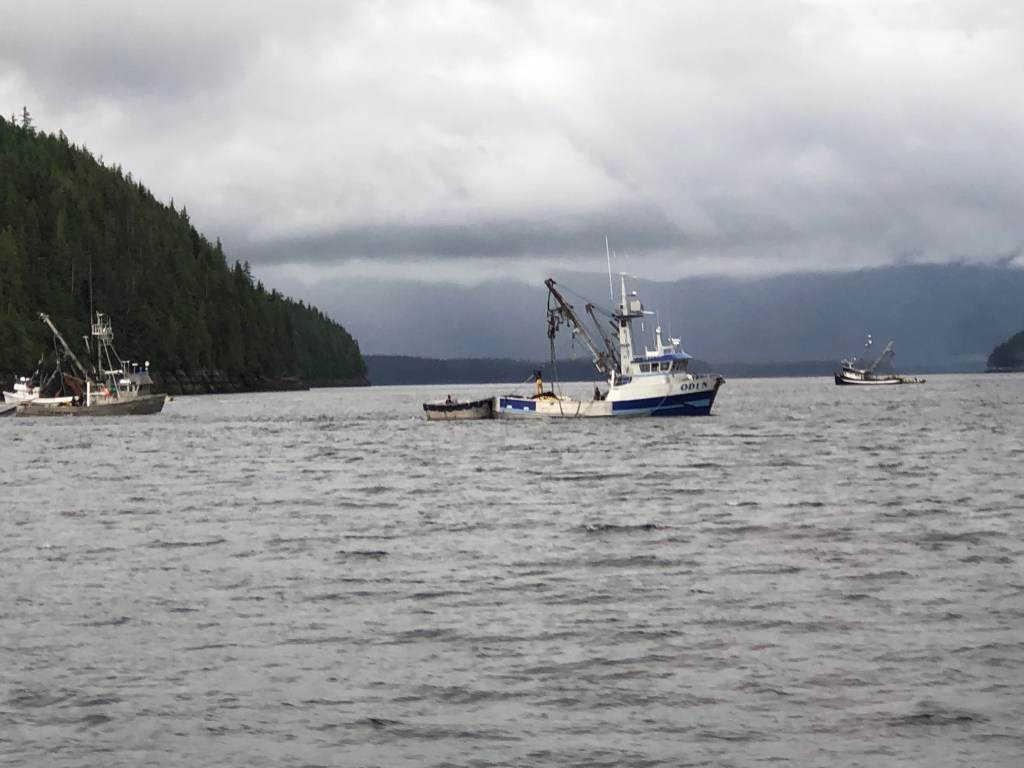
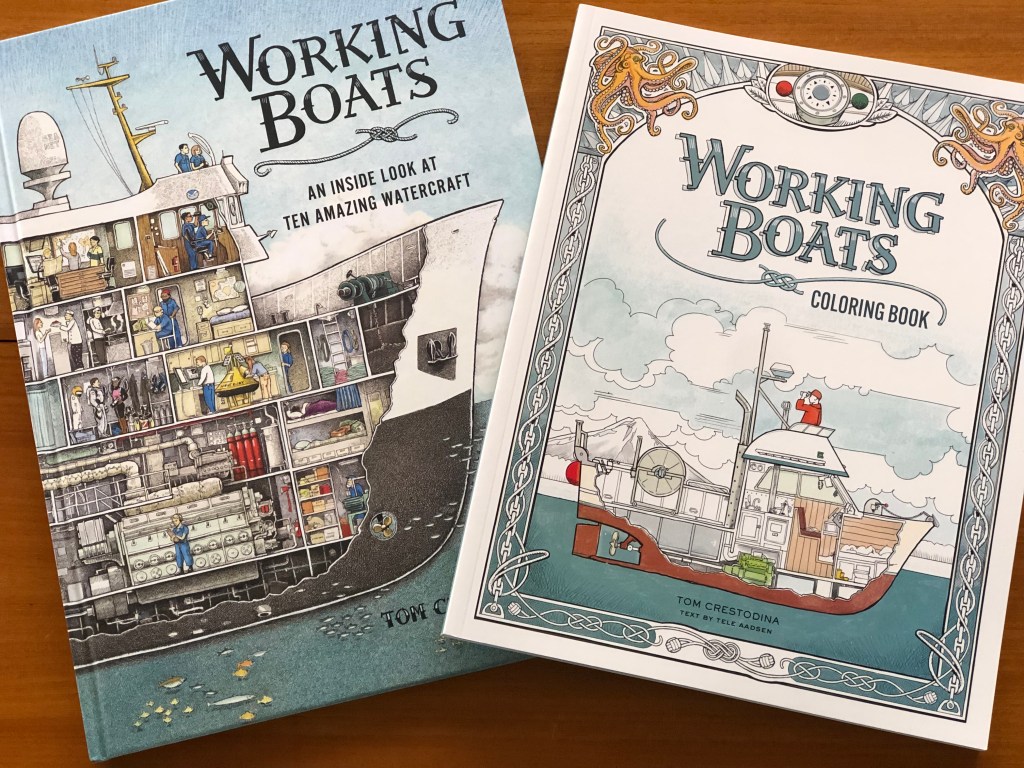
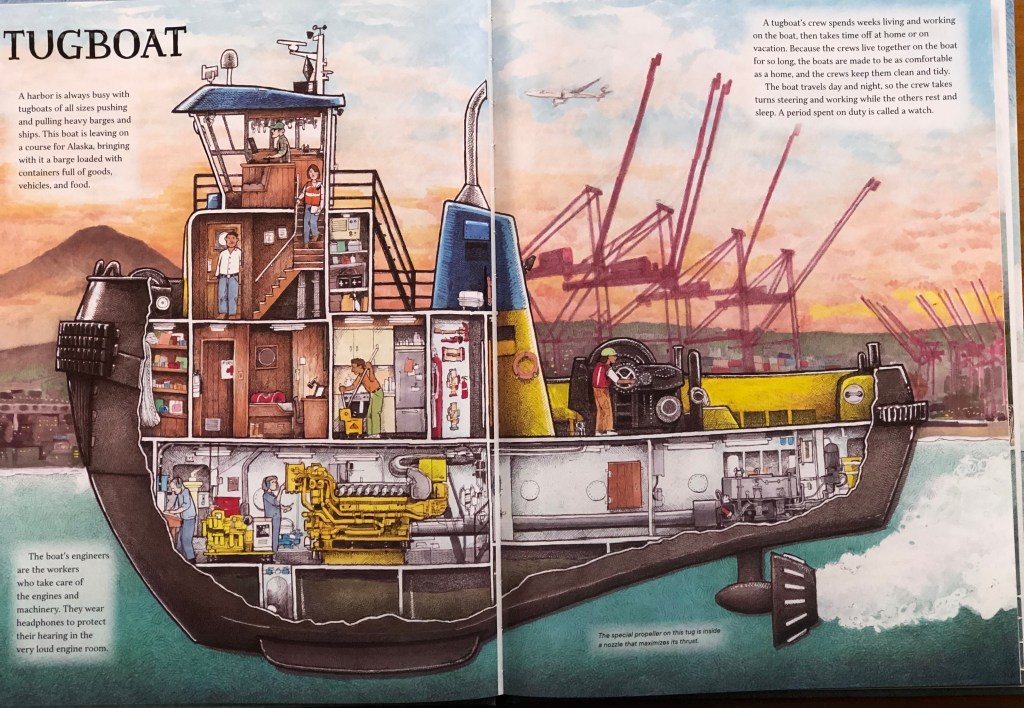
Fishing provides a living for many Alaskans and we’ve grown fascinated with the complex industry after seeing so many fishing boats on the water and in harbors. On the surface they appear to be just a huge mass of metal with complicated rigging, but inside are like multilevel condos, designed with intention. For example, the salmon seiner has a salt water hold where fish are kept when the net is pulled in, while halibut schooners, which line fish, need deck room to clean their catch, then pack it in ice. The industry is regulated and closely monitored, impacting when and where boats can fish. For instance, when Fish and Game determine not enough salmon are returning to streams to spawn, commercial fishing is stalled for several days until the salmon numbers increase. When we passed through Petersburg, we boarded a salmon seiner and learned from the crew some of the intricacies of this profession. Children’s books were another great source for understanding local boats and fishing, and we learned much from books purchased for grandchildren.
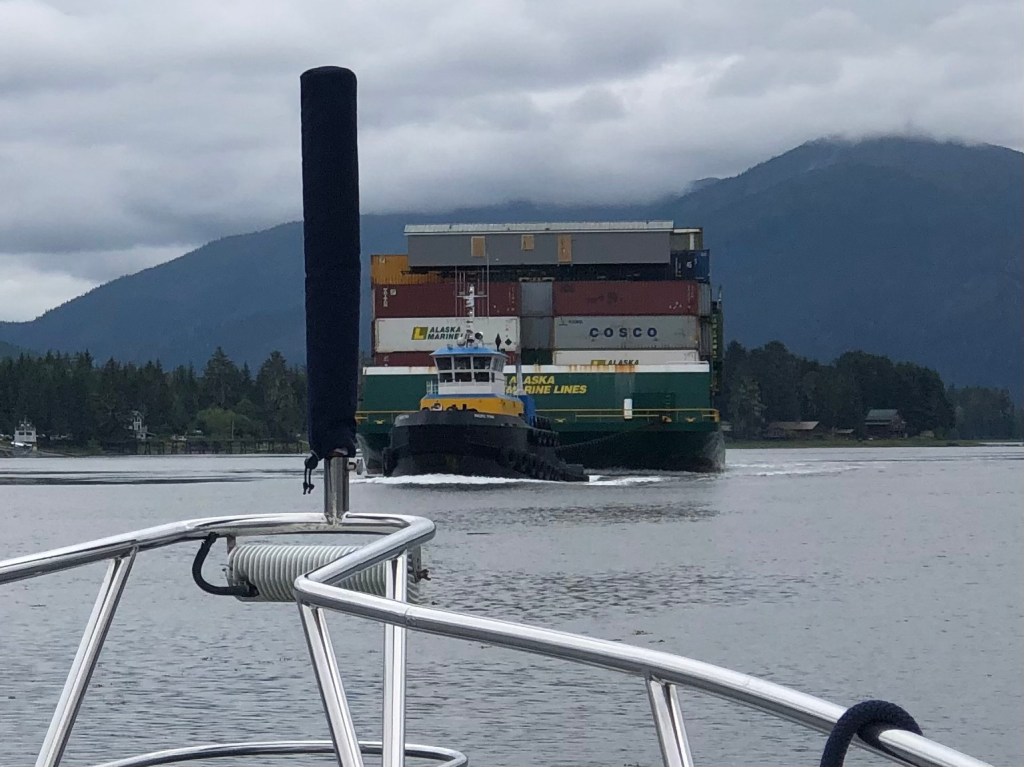
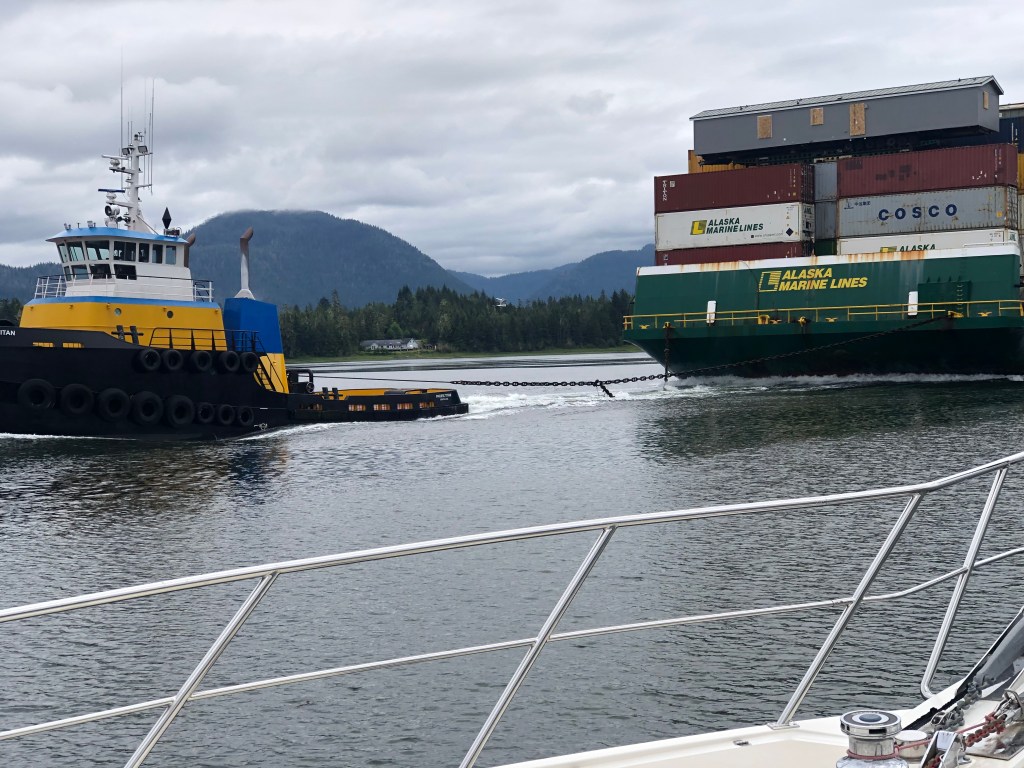
On our way through Wrangell Narrows, we had a close encounter with another boat: a tug “carrying” a container barge. As luck would have it, we met at the pinch point in the Narrows, but Bob is never rattled by these encounters. The captains talked on the radio, chose a port-to-port pass, and we crossed paths without incident.
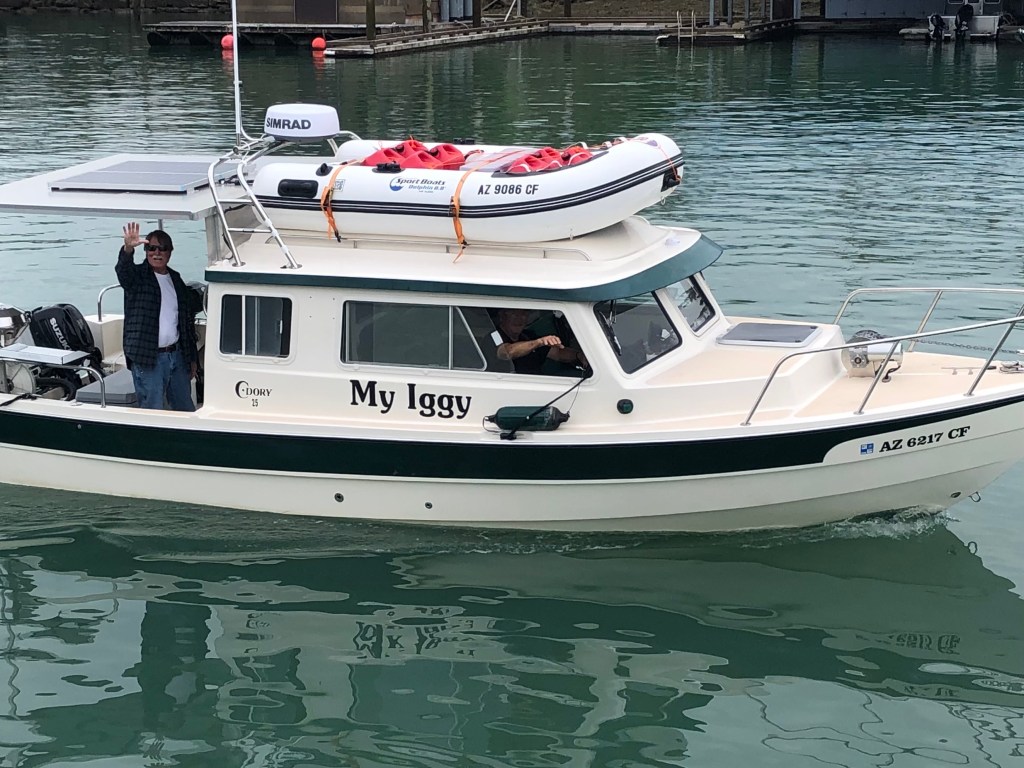
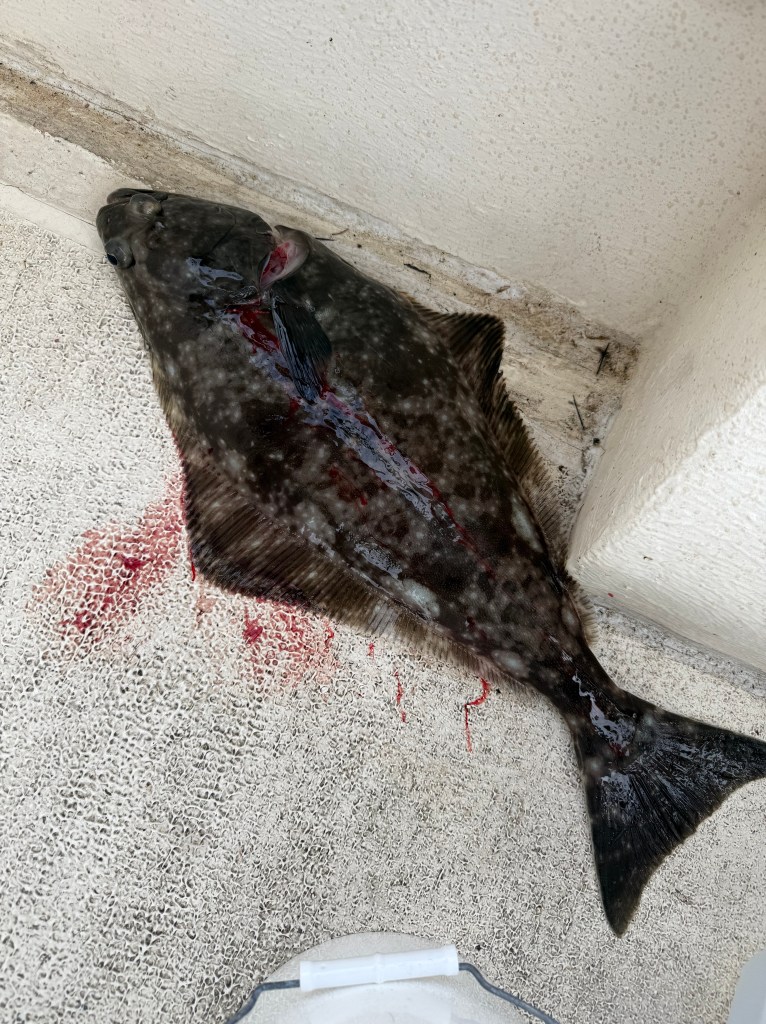
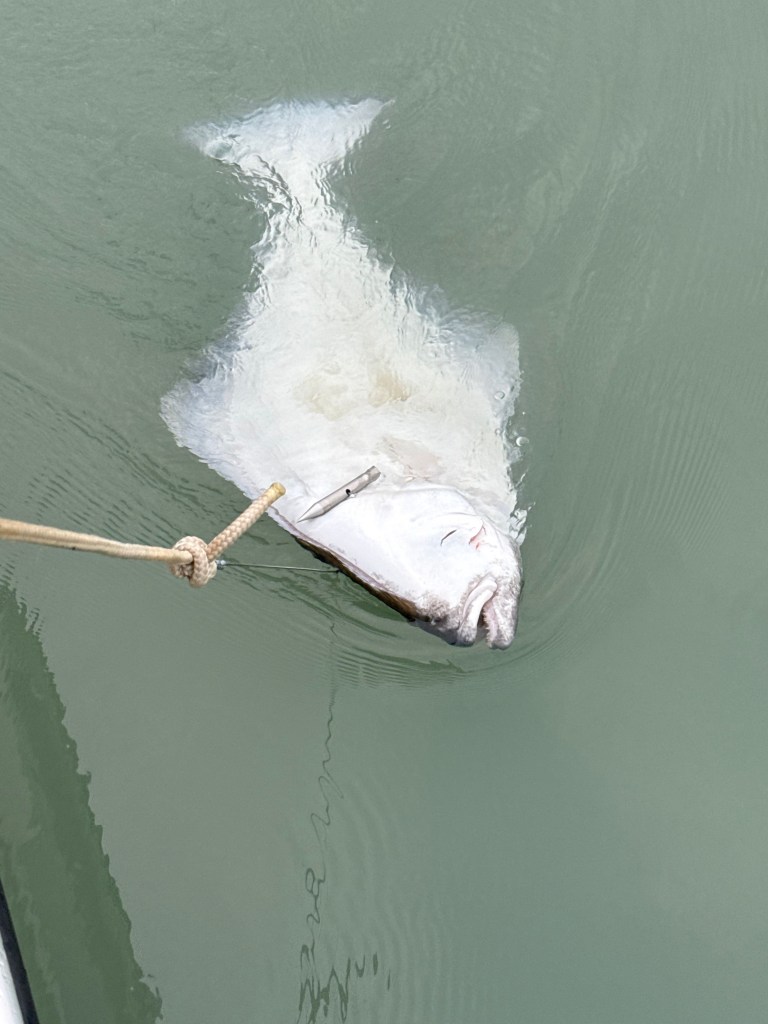
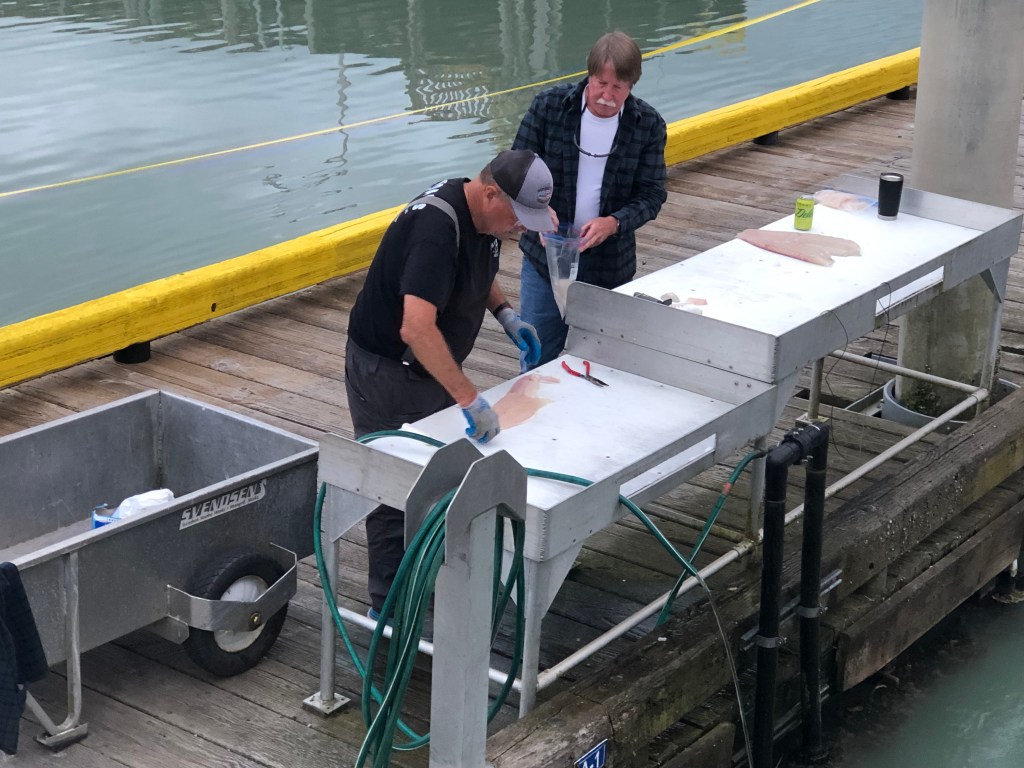
Bob got a chance to fish when we reconnected with My Iggy captain, Dennis, on our pass through Wrangell. He caught two halibut, which, if fish can be fascinating, this one is. Halibut are considered flat fish and swim on their side through water. At 6 months old, the eye on the bottom side of the fish migrates to the top, so both eyes are on the same side, looking up. What’s more, halibut are two colors – the top looks like they’re wearing camouflage, while on the bottom they are white. Now we have a freezer full of halibut, minus what we used last night for halibut chowder.
After last night at anchor in quiet Santa Anna Inlet, we’re headed to Ketchikan, where we will wait for a fair weather window to transit Dixon Entrance, making our way back into Canada.
 Edging Forward
Your adventures are amazing. The information about the halibut and the boats was very interesting. My brother, David, worked on a tug boat out of Coos Bay for a while when he was young. I had no idea about the configuration of the vessel. Both boats are quite efficient. Your passing the tug boat with the huge barge must have been a bit nerve wracking. I hope the rest of your journey goes smoothly.
>
LikeLiked by 1 person