

The night before leaving, we prepared the boat for a rough journey. According to Environment Canada, weather predictions for the week were not good for a crossing, with Sunday being the “least bad day”. NOAA predictions contradicted that, and consulting various weather and wind apps indicated Sunday should be fine, so we planned for the worst but hoped for the best. Anything that might spill, roll, or be knocked over in big seas was secured or lashed down. Early Sunday morning we were sipping coffee and doing a final weather check – we decided to go. At first light, we were the third boat to head to Alaska … a good sign our research was sound. An hour later, five more boats we knew left Prince Rupert harbor, one was a 100+ foot yacht, two others not more than 30 feet, all of us heading to Ketchikan.
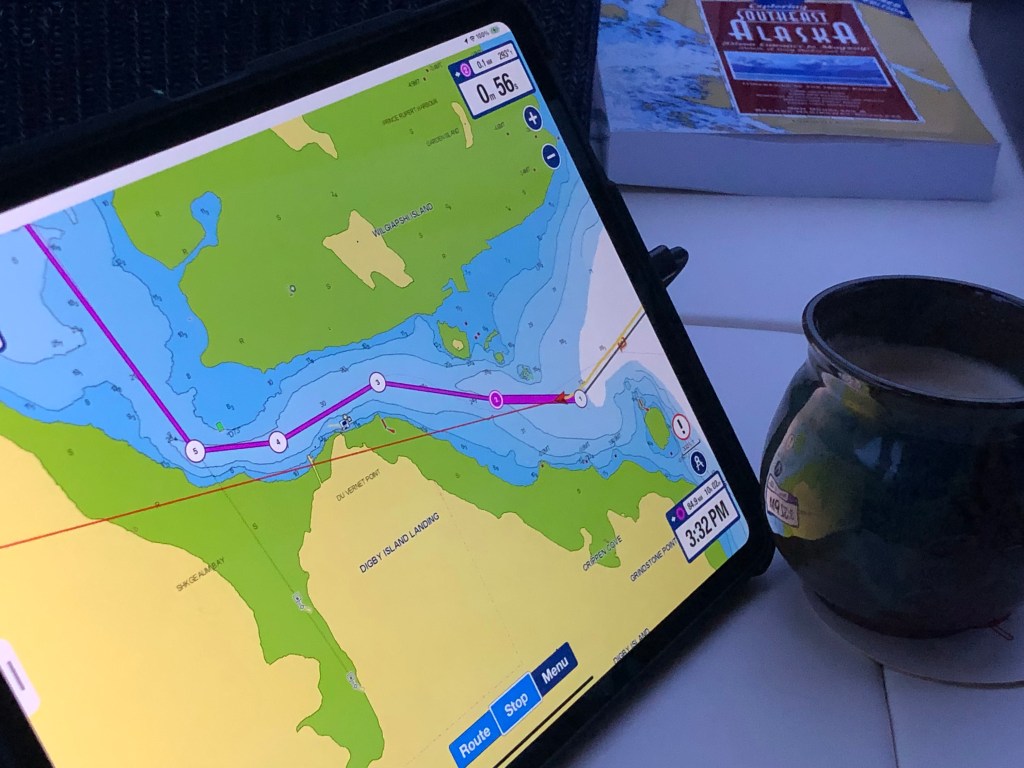
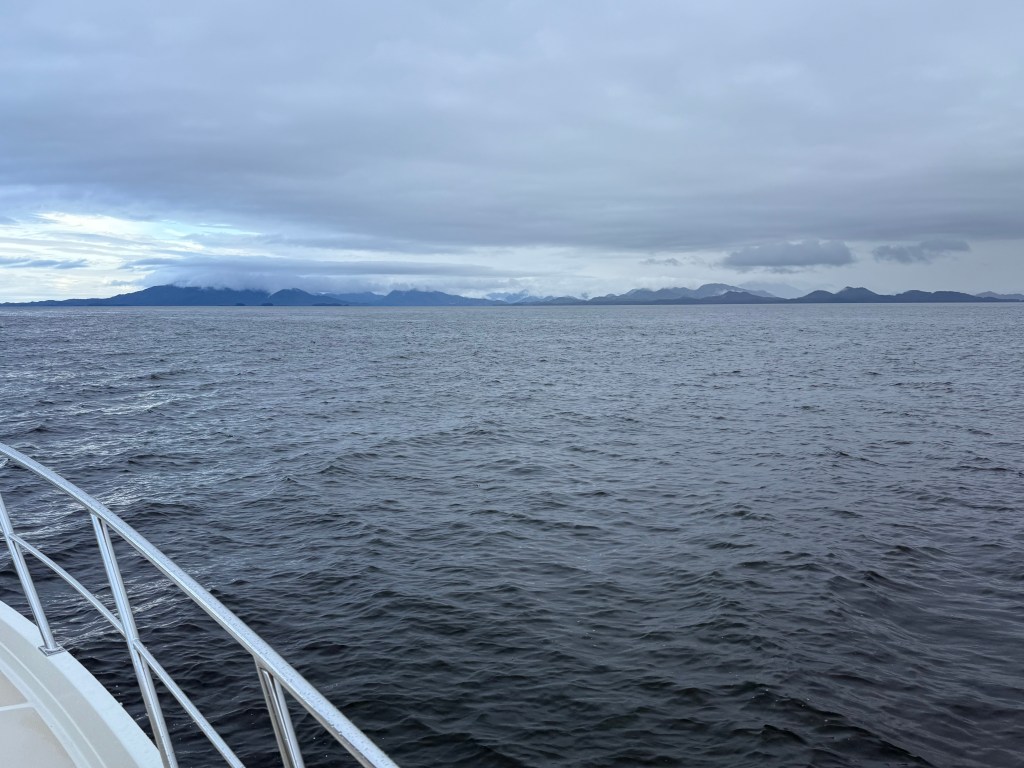
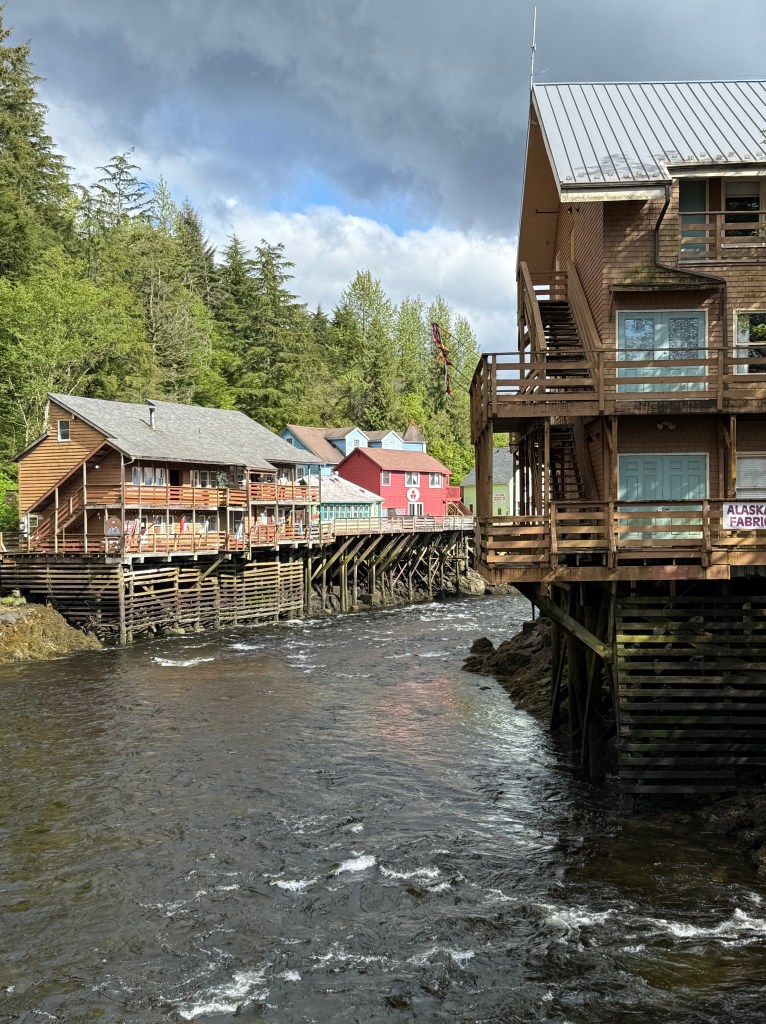
Leaving Prince Rupert through the northwest entrance, Venn Passage, was a new challenge, with many twists and turns in shallow water through an estuary. The rule of thumb with chart depths is “stay in the white and you’ll be alright” but most of what we had to transit was in blue (low depths), on an ebbing spring tide (high tides are higher, low tides lower). We followed Free Spirit, who’d made the trip in 2021, and closely monitored depths. An hour after dropping lines, we finally were through Venn Passage, and heading out to open waters. The trip to Ketchikan was long, over nine hours on the water, but relatively uneventful. We arrived tired, but not too tired to give thanks for a safe passage, and go out exploring. Alaska is in a different time zone, an hour earlier than Pacific, so we’ve reset our clocks and are settling in to enjoy a week in and around Ketchikan. Brian and JD arrive in Ketchikan June 1st.

 Edging Forward